Money20/20 Las Vegas brought together the shapemakers of payments from around the world to reflect on this year’s most prominent trends and emerging technology. And one message was clear: the future will not be defined by a single rail, channel, or protocol. It will be defined by how effectively businesses make payments more adaptable, resilient, and useful for consumers (and machines).
For Checkout.com, that meant bringing our perspective to three important conversations on stage, while making our presence felt across the city of spectacle and big ideas. It’s always inspiring to see your colleagues on stage sharing what it takes to build the payments infrastructure needed to help businesses thrive in a complex ecosystem.
Here are my key takeaways from this year’s event.
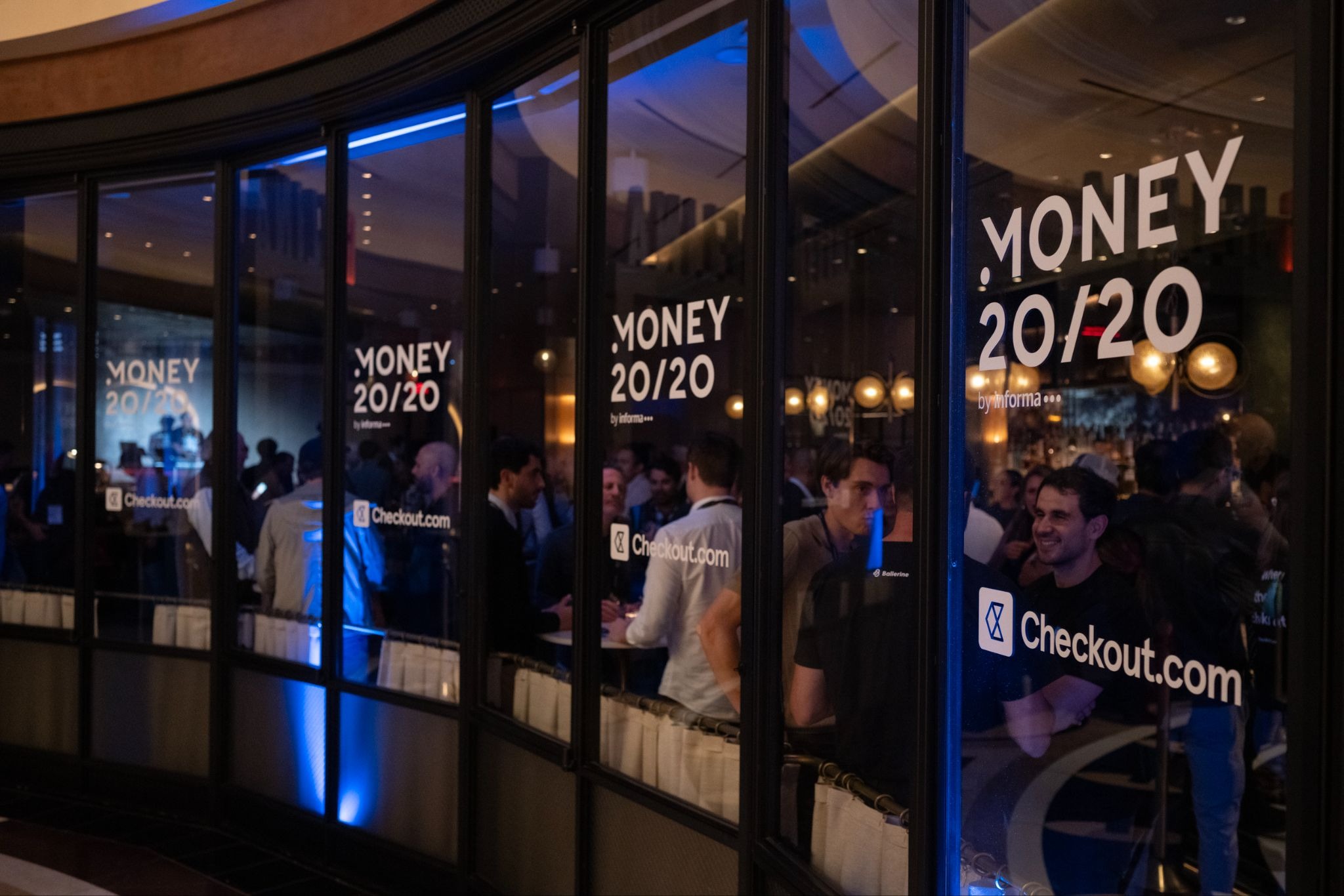
1. Competitive advantage is changing in the age of AI
Agentic commerce has moved fast from theory to transaction. When autonomous AI agents handle product discovery, negotiation, and checkout, winning brands won’t just optimize for human eyes – they’ll optimize for machine readability and cryptographic trust.
As I discussed with Inderpreet Hundal, VP, Agentic Commerce at American Express and Moe Matar, CTO at OnePay, readying your business for AI agents requires fundamental changes:
- End-to-end interoperability: Preparing product metadata isn’t enough. Backend data, inventory tracking, fulfillment, and identity verification must communicate in real time across open ecosystems. There is no single winning protocol – merchants need interoperable foundations that allow them to participate across ecosystems without building a bespoke integration for each.
- Programmable trust: Technical readiness is only part of the equation. Handing a customer’s wallet to an algorithm demands clear guardrails, granular spending limits, and immediate revocability.
The bottom line: Agentic commerce will reward readiness, interoperability, and trust. Tomorrow’s winning brands will need to build for, and earn trust from, both humans and agents.
2. Stablecoins are at a strategic inflection point
The narrative that innovation and regulation are opposing forces is dead. Today, clear regulatory frameworks (like MiCA and the GENIUS Act) and market maturity are turning stablecoins from speculative crypto instruments into core treasury and settlement infrastructure.
In a fireside chat with Félix CEO Manuel Godoy, Checkout.com General Counsel Emilie Mathieu noted that regulation is an enabler, not a constraint: payments fundamentally run on trust, and regulation establishes the baseline. Innovation also takes a village, in which regulation firmly resides.
The immediate opportunity looks like:
- Instant, 24/7 access to funds.
- More efficient global payouts.
- Faster cross-border money movement.
- Reduced settlement friction.
One thing to note: The right use case depends on the business. Stablecoins won’t replace every existing payment rail. Success requires auditing counterparty risk, wallet screening, AML compliance, liquidity, and operational readiness – while assessing where stablecoins create measurable value.
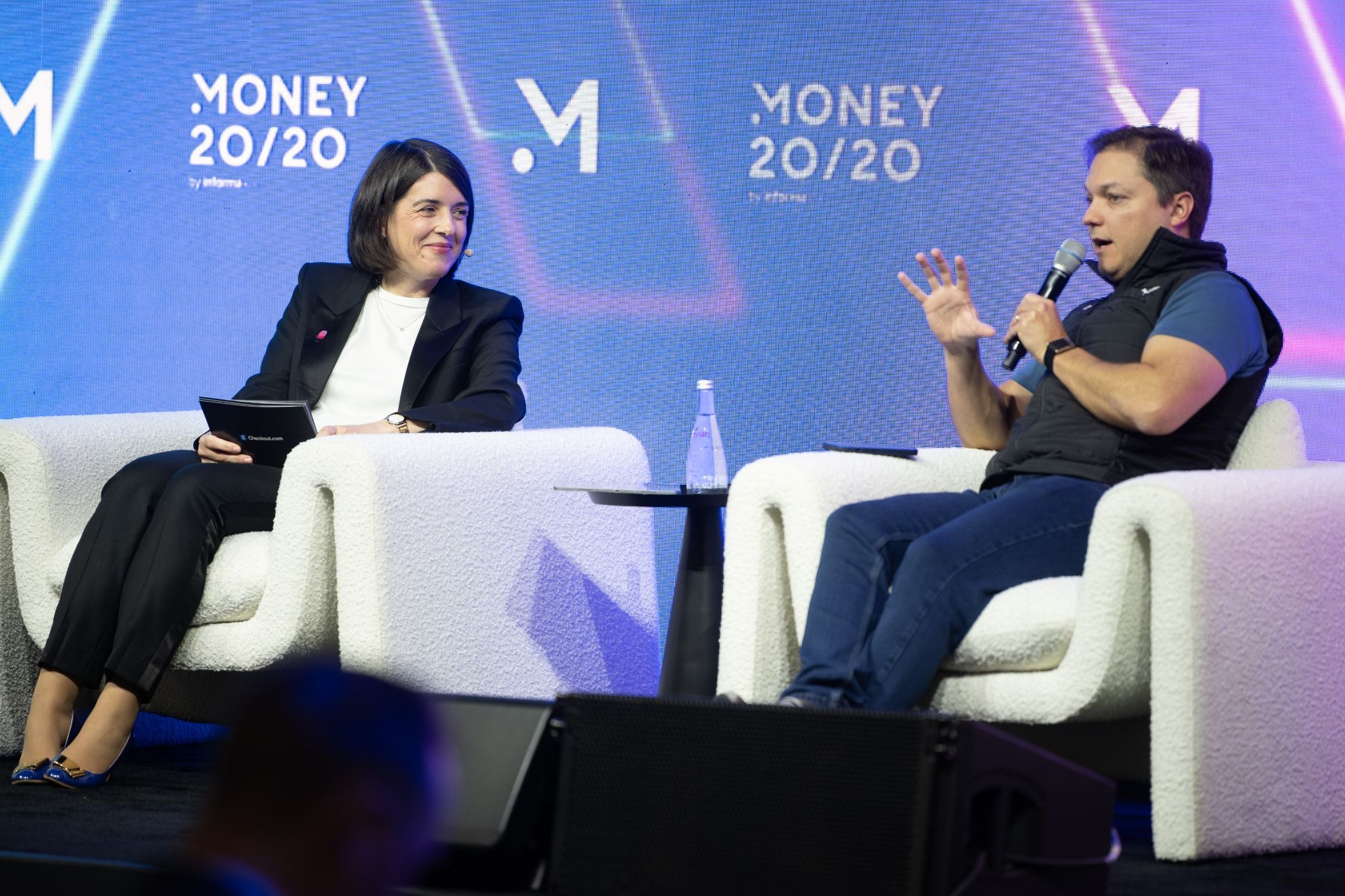
3. Winning in the US demands local fluency
Treating the United States as a single, homogenous payments market is one of the costliest mistakes a scaling merchant can make. Assumptions imported from other regions can be misleading.
On stage with Visa, Samsung Pay, and Block, Jordan Reynolds – Checkout.com’s CEO of MALPB and Head of North America Banking – broke down the operational realities of US expansion:
- Fragmented economics: Diverse regional banking ecosystems, complex interchange categories, and varying issuer risk appetites mean generic routing leads to immediate decline spikes.
- Evolving consumer behavior: US checkout habits shift rapidly across digital wallets, installment credit (BNPL), and traditional debit networks.
The bottom line: Strategic partnerships, carefully chosen infrastructure, and a detailed understanding of payment economics will be critical for businesses entering or scaling in the US. Merchants also need to measure the incremental value of each payment method, capture the right data, and stay close enough to changing customer behaviour to adapt quickly.

4. The death of the “online vs. offline” divide
The wall between ecommerce and point of sale has collapsed. Enterprise merchants want unified commerce: a single view of the customer across digital channels and the physical store.
That demand drove Checkout.com’s launch of In-person Payments at this year’s event. By bringing a software-led, device-agnostic POS architecture to market, merchants gain the freedom to run on their hardware of choice while keeping unified data, routing logic, and settlement in one place – and open new revenue opportunities.
This is a continuation of the mindset that has guided us from the beginning: keep moving forward, deliver value to merchants, and build on what we learn. Merchants asked us to bring the speed, reliability, and pace of innovation they know from Checkout.com’s payments platform to the point of sale. Our job is to go where merchants need us most.
Moving payments out of the background
We usually work behind the scenes, making payments invisible. Payments have historically succeeded that way. But building the infrastructure for agentic commerce, regulated digital assets, and borderless expansion sometimes deserves time in the spotlight.
That’s why we expanded our Where the World Checks Out campaign and brought our presence into the Las Vegas strip through high-impact out-of-home placements and brand moments.
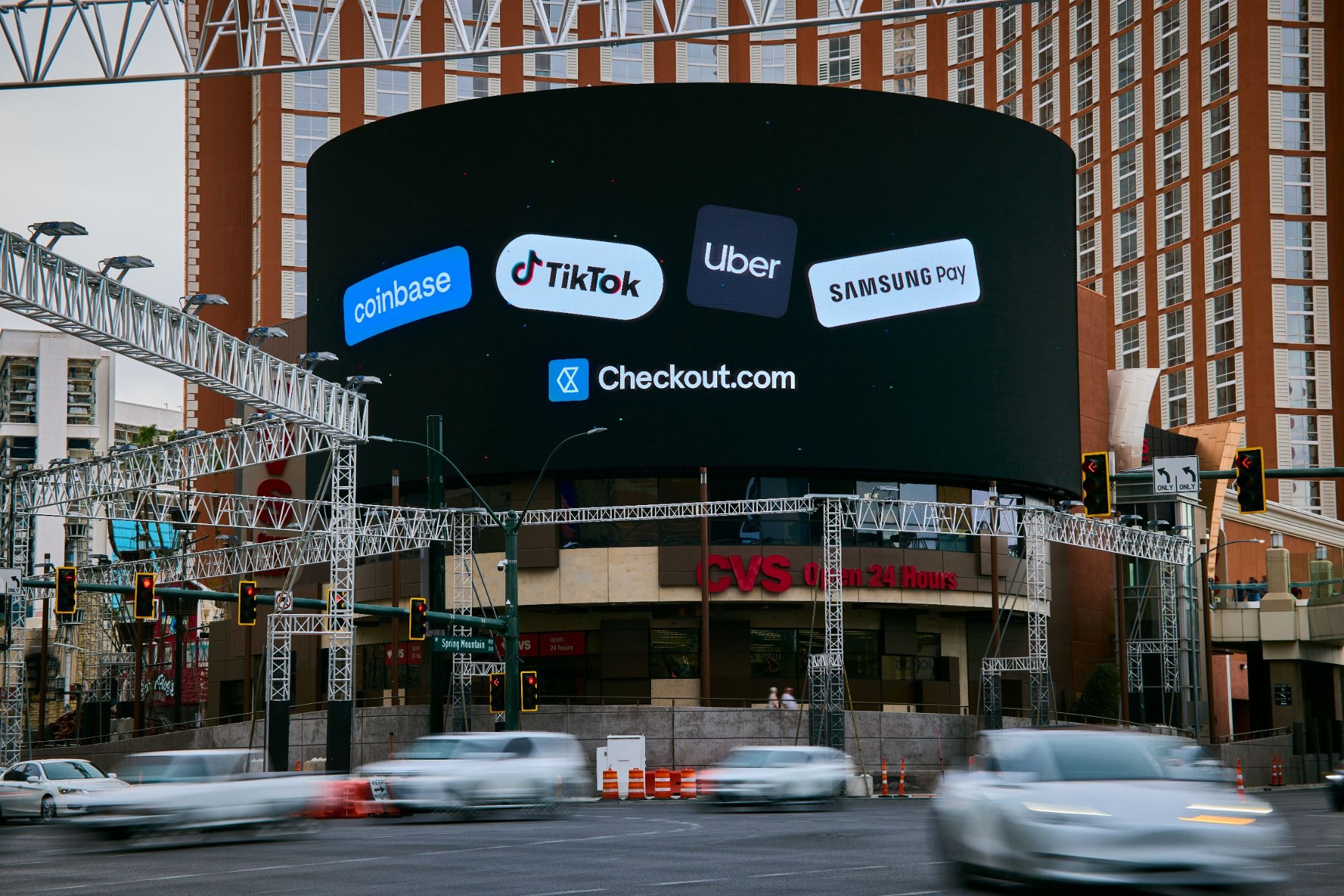
Money20/20 represented big ideas and bold conversations. And a few Checkout.com billboards around Las Vegas (and a stand up set from comedian Trevor Noah) added some noise.
Between the packed sessions at the Venetian and our Where the World Checks Out campaign across the Las Vegas strip, Money 20/20 reinforced the scale of change underway in payments – and the importance of building infrastructure that can keep pace.