
Checkout.com’s technology teams have always subscribed to data-driven, iterative improvement. No Room for Approximation is one of our operating principles, guiding us to be data-driven and thorough in our execution. Long before AI became the dominant force in productivity transformation, our engineering organization was obsessed with its own performance. For years, we have tracked, analyzed, and optimized every metric across the software development lifecycle (SDLC), from backlog health and pull request (PR) cycle times, to DORA metrics, test coverage, and incident SLOs.
Now, AI has presented us with a profound opportunity to experiment, learn, and push for even greater performance. Here is how we are putting it into practice.
A culture of performance
Throwing tokens at engineers and hoping something will stick is not a strategy.
While we have a long-standing culture of experimentation at Checkout.com, our culture of AI experimentation has accelerated significantly since early 2025. We set specific growth goals for our engineers and integrated AI usage and impact tracking directly into our ways of working. An AI-first mindset and deep technical curiosity are now fundamental to how we hire and assess top talent. The result has been a compounding effect. We have built an engineering department that does not just use modern tools every day on every part of the SDLC – it builds its own.
Building more, faster
One of the clearest examples of our builder culture is our in-house AI coding agent: Agent HAL. Read more about it here.
We are systematically automating every part of how we build, own, and operate Checkout.com's products. In the first half of 2026, on average, 8% of all tickets from onboarded teams have been generated by HAL – using our custom-built skills to define, create, or review work. HAL’s involvement is accelerating rapidly, and in June alone, that figure was 18%.
Where our engineers are not entirely offloading work to HAL, they are moving faster with local agentic workflows. In the first half of 2026, around 70% of all the code we shipped had AI involvement. Beyond Engineering and across other teams, such as Technical Operations and Data Science, AI involvement in PRs tracked at 69% over the last six months, growing to 83% in the last three months.
The impact on our delivery pipelines is undeniable. Year-to-date, the time from a PR being created to its first review has reduced by 84%, and the time to merge has dropped by 59%.
Beyond engineering
As engineering efficiency accelerated, we recognized a new challenge: our development speed outpacing the rest of the business. In practice, AI was amplifying every other bottleneck outside engineering.
Because of this, we took steps to ensure every team can meaningfully use and experiment with AI. We’ve developed our own internal hosting and deployment platform, Arrakis – a central hub for employees to build and share their AI-generated projects, apps, and workflows in a safe environment.
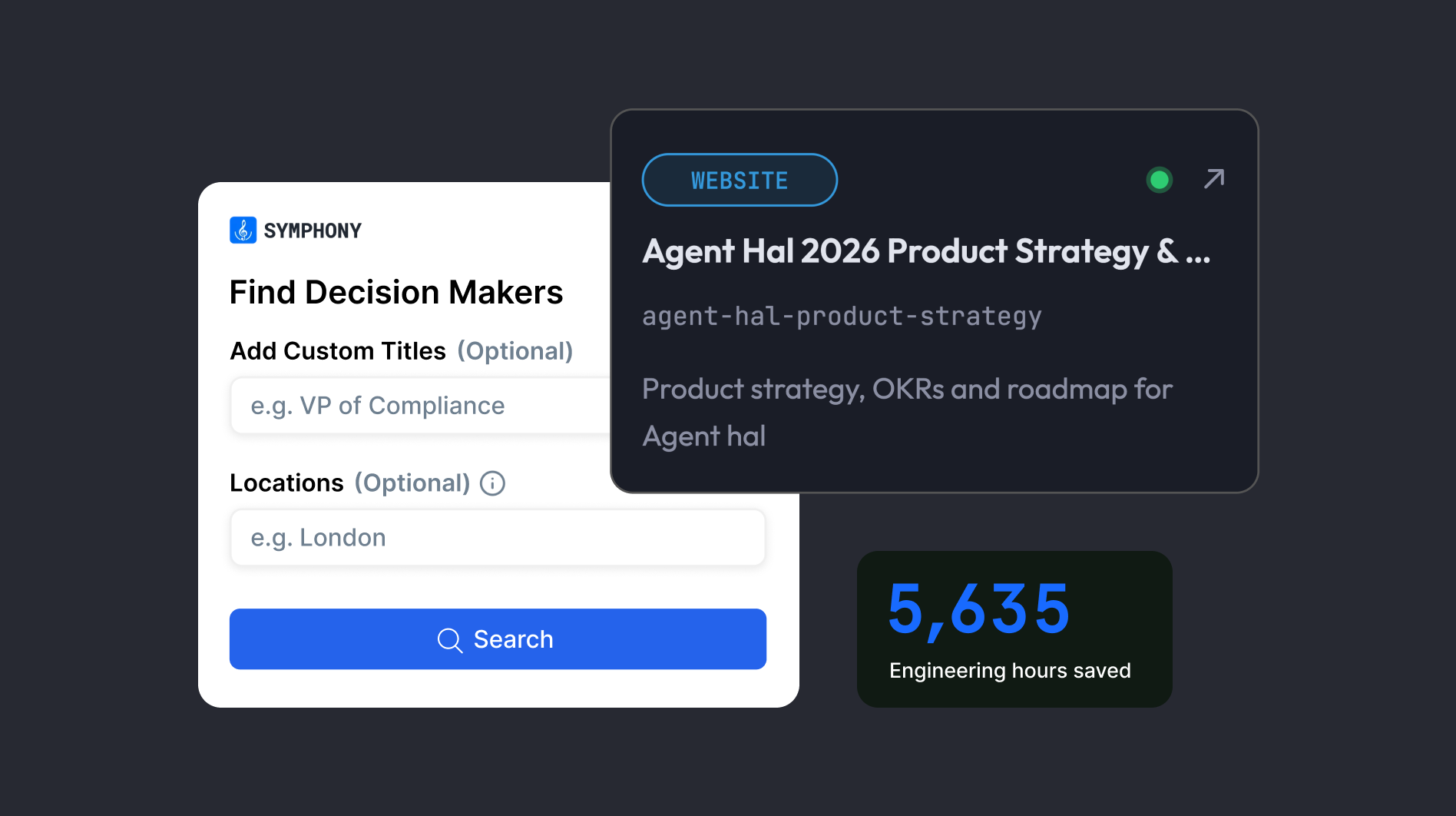
We’ve also launched Symphony, which helps our marketing and commercial teams automate the kinds of work that consume hours every week: researching accounts, drafting and tailoring marketing materials, producing microsites and more. Symphony alone is driving 10x faster content creation.
Across our Merchant Care and Support functions, we’ve begun automating merchant-facing assistance. Around 60% of our support volume consists of simple, repetitive support queries, and thus represents a perfect use case for AI to automate triage and response – allowing our team to focus their time on delivering high value assistance to our merchants.
What we are taking away from this
AI usage at Checkout.com is amplifying who we already are: curious, performance-obsessed, data-driven, and passionate about our merchants. Through Agent HAL and other in-house workflows, we've seen significant gains in engineering performance, from millions of lines of AI-assisted code to drastically reduced merge times. But the real shift is that AI has become part of the infrastructure here at Checkout.com, not an add-on.
Arrakis and Symphony show that this shift extends well beyond engineering, giving every part of the business a way to build and scale its own AI-powered workflows. No Room for Approximation is what got us here: the same discipline that drove us to track every SDLC metric for years is now driving how we build, test, and trust AI. As we look ahead, we'll keep applying that same rigor, because, as we like to say, there's no finish line in this race.





%20thumbnail.png)

.png)


%20(1).png)