
.png)
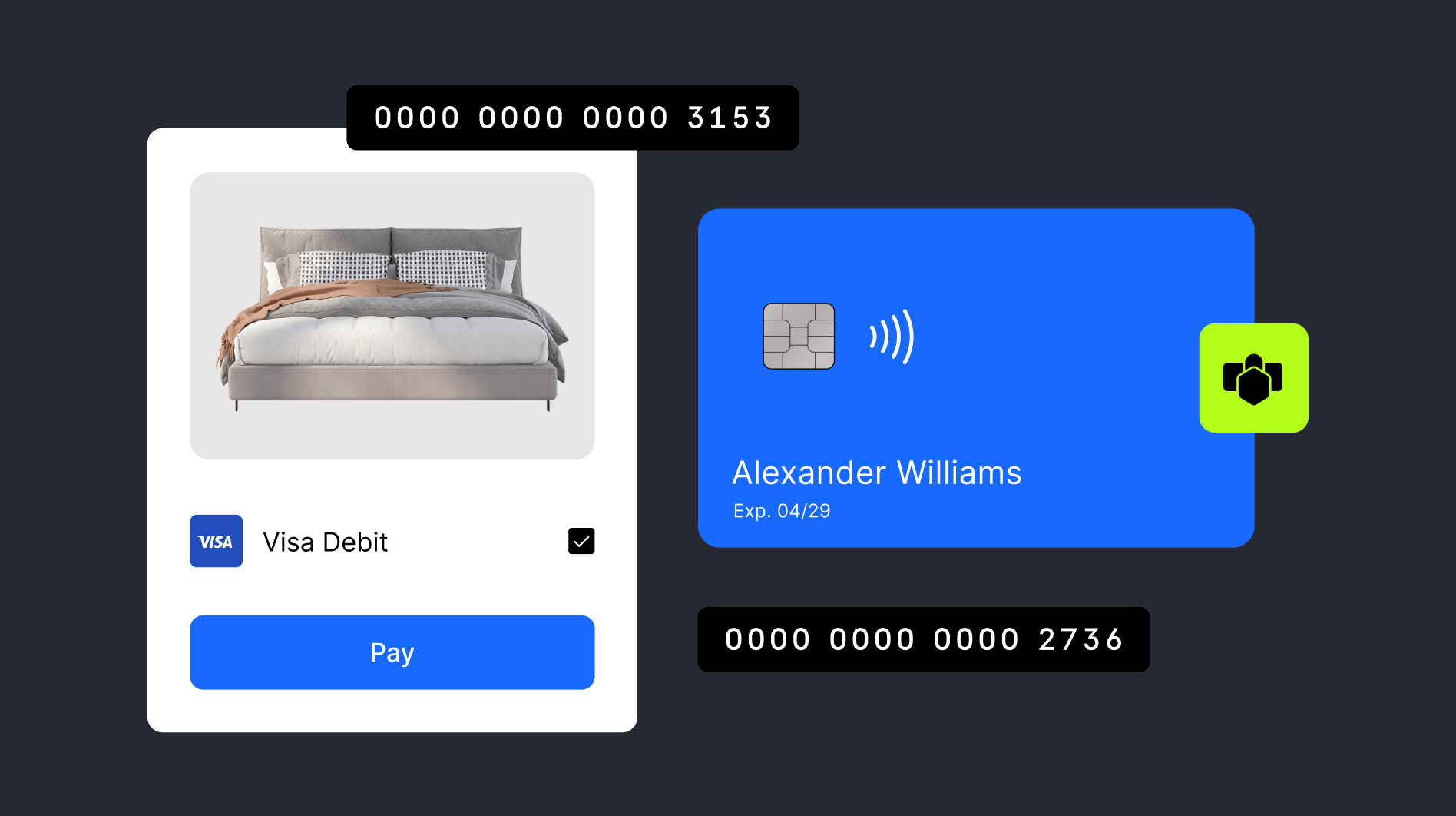
A device account number is crucial to the functioning of Apple Pay. By replacing customer card details with this unique and unrelated number sequence, merchants can take streamlined and secure payments.
It’s estimated that over 744 million iPhone users have enabled Apple Pay worldwide. Apple Pay has seen the highest penetration in the UK, Canada, and the US, with over 33% of users choosing it for online payments in all three markets.
This widespread adoption makes device account numbers (DANs) a vital component of the online economy and the security of online payments. As a merchant, you should understand how DANs work and why they benefit your business.
Device account number explained
When an iPhone user adds a new card to Apple Pay, the mobile wallet replaces their sensitive card details with a unique and device-specific device account number (DAN). This number is created by the card network’s Token Service Provider (TSP), with issuer authorization, encrypted, and delivered to Apple to be stored on the user’s device.
As the DAN is unique and completely unrelated to the number on their plastic card, it can only be used to make payments with that specific device. This means that it’s very hard for criminals to steal it and use it to make fraudulent transactions.
Even Apple cannot decrypt and read a DAN. It doesn’t store any part of the DAN on its servers. It’s securely stored in the device’s Secure Element (an industry-standard, certified chip), and only encrypted transaction data is passed through Apple’s systems.
How does a DAN work in online payments?
When a consumer uses Apple Pay, their DAN is transmitted through Apple Pay and the payment network as part of the transaction authorization. As the merchant, you may see the last four digits but never the full DAN.
The Secure Element generates a unique cryptogram for each transaction, which – together with the DAN – is passed through Apple’s secure channel to the payment network and issuer for authorization.
How does Apple Pay tokenization work?
Tokenization is the process of replacing sensitive card information with a meaningless sequence of numbers. This token can be used to make payments instead of genuine card details, which could be stolen and exploited by fraudsters.
The DAN is simply the tokenized representation of a user’s card. When a customer enters their card details or takes a picture of their card in order to store it in their digital wallet, Apple identifies the user’s issuer from the BIN number and asks it to generate a payment token. For this to work, the issuer must be a member of the Apple Pay network.
The issuer then asks the token service provider (TSP), typically the card network associated with the card, to create a token. The TSP generates a token, stores the token and actual Primary Account Number (PAN) in its token vault, and sends the token and token key (which decrypts the token) to the issuer. At this point, a dynamic cryptogram (similar to a one-time CVV) is created, which facilitates authorization. The issuer then sends the token, key, and cryptogram back to Apple, which stores all three values on the Secure Element of the user’s device.
Why is a device account number important?
The device account number presents numerous benefits for your business, including:
- Fighting fraud: Previously, card-not-present (CNP) fraud was a big risk during online payments, because PANs could easily be stolen and used to make fraudulent payments. With a DAN, this is not possible because the card details are tokenized, and the DAN can only be used with associated devices, such as a user’s iPhone and Apple Watch. A hacker would also have to access the device’s authentication factors or the token key to exploit a DAN, which is next to impossible.
- Improving compliance and reducing security burden: Because you’re not responsible for storing, decrypting, and processing the customer’s actual card number, the costs and administrative burden around securing payment data are significantly reduced. This, in turn, makes it much easier to comply with industry security standards, helping to avoid breaches and any associated penalties.
- Increasing sales: By underpinning the security of digital wallet payments, DANs are enabling the rise of what is set to become the most popular online payment method. By meeting consumer preferences for speed, security, and convenience, digital wallet payments are increasing the acceptance rate, and therefore sales, for online merchants.
Why you should choose Apple Pay for your business
While it competes with the likes of AliPay and WeChat Pay in Asia, Apple Pay is the most popular mobile payment method in the US and the UK. Consumers like to be able to pay using their preferred payment method, and doing so builds trust with your business and increases the chance of a successful transaction. If you don’t accept Apple Pay, you could be missing out on masses of potential sales.
Accept Apple Pay with Checkout.com
With Checkout.com, it's easy to switch on Apple Pay and start offering it to your customers.
Speak to a member of our Sales team to discover how you can use Apple Pay to boost customer satisfaction, increase sales, and reduce chargebacks today. Or to build a more detailed understanding of how to implement it with Checkout.com, you can review our Apple Pay documentation.






%20thumbnail.png)

.png)


%20(1).png)