%20(1).jpg)
.png)
Each week, I brainstorm with ambitious merchants on new ways to improve revenue and delight customers. And each week there’s breaking news of exciting AI capabilities in ecommerce. With so much going on, it’s natural to have questions – what does this mean for your business? What are the risks and opportunities?
Together with integration expert Michael Taylor, Solutions Engineering Director at Checkout.com, I recently answered live questions on agentic commerce at a webinar hosted by the Merchant Risk Council (MRC). We unpacked what this emerging technology really means and why it matters now.
If you want to rewatch the webinar, it’s available on MRC’s member portal. Here’s a rundown of our Q&A:
What are agentic protocols and why are there so many?
The agentic landscape is busy. With new terminology like Agentic Commerce Protocol, Universal Commerce Protocol, Visa Intelligent Commerce, and Mastercard Agent Pay springing up, it can feel overwhelming. But what’s happening is actually very natural for an ecosystem that’s forming.
A small group of major players – like OpenAI, Google, Visa, Mastercard, and others – are each publishing agentic commerce protocols. And when we talk about protocols, what we’re really talking about is technical guidelines for how agent-led transactions should work. What’s important is that these protocols aren’t trying to do the same thing, and each one is solving different parts of the journey based on where that organization sits in the stack.
- AI platforms are focused on how agents interact with users (i.e. consumers): capturing intent, supporting discovery, and representing user preferences and permissions.
- Schemes are focused on trust and security: how consent is granted, scoped, revoked, and how responsibility is managed when an agent initiates a payment.
- Merchants are focused on control: things like checkout experience, routing, authentication, compliance, disputes, and refunds.
- PSPs are supporting merchants to configure the best payments setup for their needs.
Where this becomes interesting is that none of these layers can work in isolation. For agentic commerce to truly scale, these protocols have to connect cleanly into existing payment infrastructure. All of them are addressing questions, such as:
- How do businesses and agents communicate in a structured way?
- How does discovery turn into a transaction?
- How does checkout work when the consumer is interacting with a chatbot?
- How does user consent become durable, auditable, and revocable?
- And how is that consent used downstream for programs like disputes and liability?
What we’re seeing now is early convergence. The standards are being defined, responsibilities are becoming clearer, and the ecosystem is learning how these pieces fit together.
Two of the major agentic protocols are Agentic Commerce Protocol from OpenAI, and Universal Commerce Protocol from Google. I’ll give an overview of these, below.
What is ACP and what do merchants need to know?
Agentic Commerce Protocol (ACP) is an open standard designed to enable native checkout experiences directly inside an AI platform (such as ChatGPT or another one).
The idea is that a user doesn't have to jump out of the chat, and the entire purchase can happen inside the chat experience. Today, ACP is deliberately narrow in scope. It's focused on traditional ecommerce use cases and is currently live in the US, and that's intentional. It allows the ecosystem to validate trust, consent, and liability in a controlled way before expanding over time.
What ACP really does is lay down the rules for AI platforms, merchants, and payment service providers to interact and enable an agent-led transaction without changing who the merchant of record is.
How can a merchant make their products visible to ACP?
For ACP, the merchant explicitly opts in to sharing product information with the AI platform. This isn't a passive or scraped process.
The merchant registers with OpenAI for the relevant commerce use case, exposes a product feed or catalog endpoint, and with that endpoint, authorizes the platform to access the data under clear terms. The feed is then pulled by the AI platform, be it ChatGPT or Microsoft Copilot, rather than pushed. So the merchant stays in control of what's shared, how often it's updated, and under which conditions.
What is UCP and how does it work?
Universal Commerce Protocol (UCP) is Google’s way of creating a common language for commerce between AI experiences and merchant systems. It defines a standard way of AI experiences to do the following:
- Discover what merchants offer.
- Understand products, pricing, and availability.
- Interact with carts, checkout options, and payment choices.
- Connect cleanly into existing merchant systems.
It’s important to say what UCP is not: it’s not a payment method, and it’s not a checkout product on its own. It doesn't replace merchant systems. Instead, it lets AI experiences and commerce systems understand each other without custom integrations for every pairing.
Read more: OpenAI’s ACP and Google’s UCP – What’s the difference?
Who takes on liability for payment fraud, and how can merchants detect if an AI agent is controlled by a bad actor?
Liability follows existing payment models. In agentic commerce, the merchant is still the merchant of record and retains responsibility for fraud, chargebacks, and disputes.
What changes is how risk is assessed. Instead of relying only on browser-based signals, agentic commerce introduces agent identity, scope, and permissions as new trust signals. Merchants and PSPs can validate which agent initiated this transaction, what permissions were granted, what limits were applied, and whether the transaction stayed within that scope.
So, detecting bad actors becomes less about a single signal and more about consistency across agent identity, behavior, and transaction patterns. A PSP like Checkout.com can help monitor these risk signals at scale.
What could be the biggest driver in dispute claims and how can we get ahead of these?
The biggest driver is likely to be user confusion: "I didn't mean to buy that," or "I didn't realize the agent would place the order." The way to get ahead of this is clarity and control. In general, the more transparent the agent’s actions are to the consumer, the fewer disputes you'll see.
Consent models and auditability are so important to reduce confusion. You need to collect data like consent and spend limits to be able to defend it in your dispute and chargeback program. In addition, you should ensure good post-purchase visibility by sending an order confirmation after agentic purchases.
Emerging protocols, such as Google's Agent Payments Protocol (AP2), address these challenges by defining how to collect consent at the point of checkout or based on parameters.
What are the extra costs for a merchant arising from agentic commerce?
Today, agentic transactions generally flow through the same commercial models merchants already have with their PSPs. So, in the near term, cost looks familiar.
That said, it's reasonable to expect this to evolve over time. For example, in the future, platforms could ask for a share of the transaction value in return for demand discovery and conversion.
Can agentic AI be used for recurring subscription services?
Yes, subscription and recurring services can be suited to agentic commerce. In this case, the value is less about discovery and it's more about management and optimization; agentic is particularly strong at things like signing a user up to a subscription when intent is clear. It can also be used for managing renewals, upgrades, downgrades, or cancellation, monitoring usage or price changes, and taking action on the user's behalf, such as switching plans or providers when better options become available.
These are the areas where users are already feeling friction today when it comes to subscriptions, and an agent with clear permission can genuinely add value.
Do merchants have to use tokens to use these protocols?
Yes. Under ACP, the mechanism is delegated tokenization. UCP leverages another type of tokenization – essentially a Google Pay cryptogram – to communicate certain pieces of information securely between providers.
How do you see agent-scoped token models coexisting with current vault-based merchant tokens or network tokens?
I don't see agent-scoped tokens replacing existing token models – they're complementary and they can coexist within the same payment stack.
Today, merchants rely on vault-based tokens or network tokenization for things like recurring payments, credential updates, lifecycle management. Those models work well and they're not going away. Agent-scoped tokens solve a different problem. They're designed to allow a specific agent to act within a clearly defined scope – for example, a spend limit, a time window, or a particular use case – without exposing the underlying card or merchant token.
So in practice, what that means is the card or the network token still lives safely in the merchant's vault. An agent-scoped token is derived from that, with tighter permissions, and once that scope expires or is revoked, the agent token becomes unusable.
From a merchant perspective, this is an additional, not a disruptive piece. You keep your existing token strategy as a merchant, and agent-scoped tokens give you a safe way to extend into agent-initiated use cases while still giving you control.
Over time, we expect merchants to use a mixture of token types: vault tokens for long-lived relationship, network tokens for reach and lifecycle benefit, and agent-scoped tokens for delegated control execution by AI agents.
What is Checkout.com’s role in agentic commerce?
Our role is to provide a neutral middle layer within the emerging agentic environment, interpreting agent protocols, scheme requirements, and merchant systems so that merchants can participate in agentic commerce without having to bet on a single platform or protocol.
Our ability to connect these elements safely is what allows merchants to move from pilots into operating at scale. Checkout.com’s systems are always fully compliant and up-to-date with scheme requirements, so you don’t need to worry about making a “wrong move” at this early stage of agentic tech.
How is Checkout.com connected to AI platforms?
Our approach is to partner with the major technology platforms in agentic commerce and design our payment and trust layers in a way that can support multiple protocols as they evolve, rather than tying ourselves to a single path. That flexibility allows merchants to participate today while staying ready for the future as these protocols expand and additional use cases mature.
How does Checkout.com ensure safety in agentic flows?
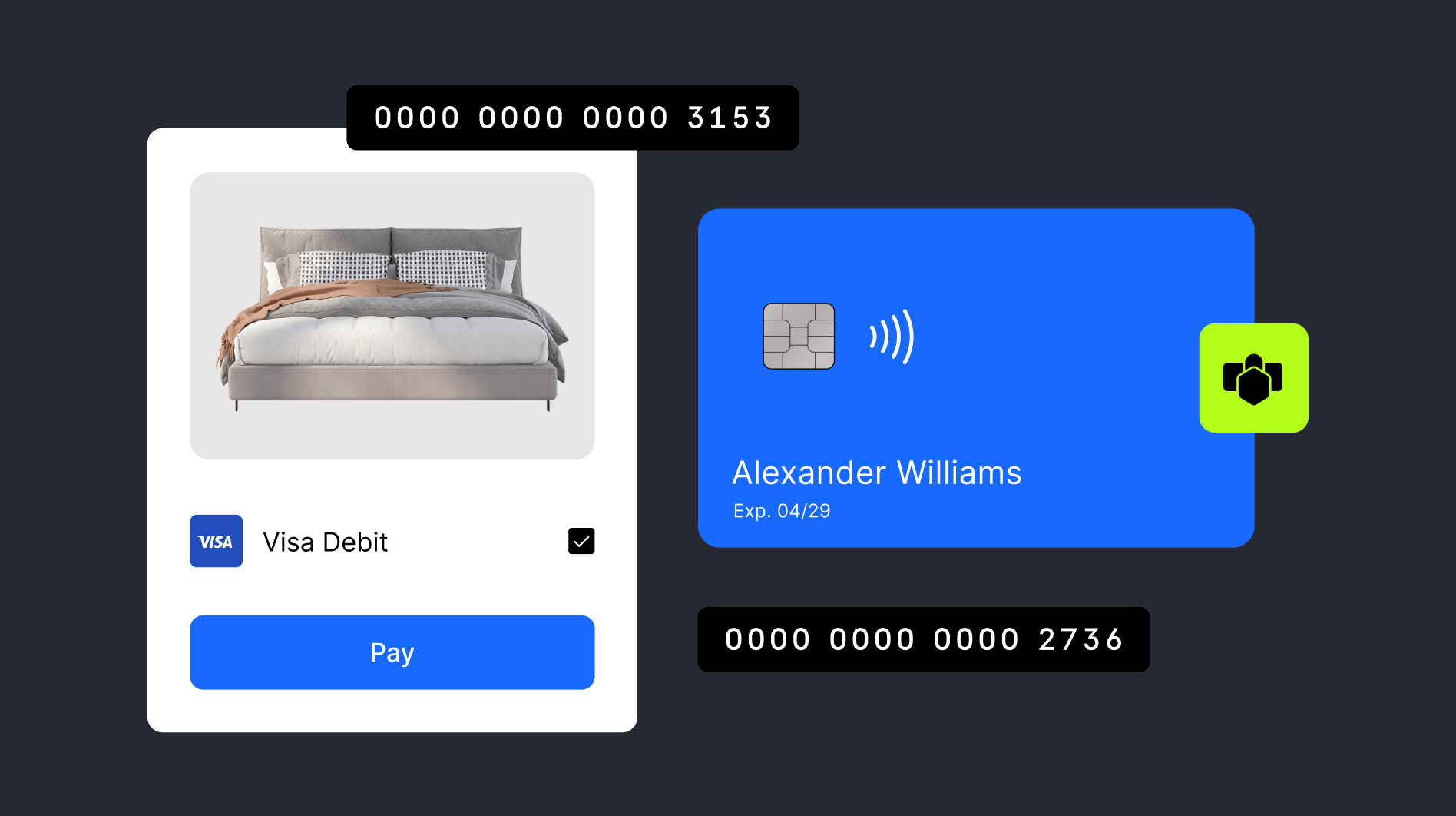
We make agentic shopping flows secure, scalable, and familiar for merchants. To ensure safety and compliance, we store card data in our Vault, and enable controls such as spending limits and scope permissions. In addition, we provide visibility – things like agent-level performance, conversion, and payment analytics – so merchants can understand how agent-initiated transactions are performing. This means you can participate in agentic commerce without having to rethink your entire payment stack or give up control.
Learn more: How Checkout.com is thinking about agentic commerce

.png)




%20thumbnail.png)

.png)

