
Few payment innovations have reshaped consumer behavior as rapidly as buy now, pay later (BNPL). In less than a decade, BNPL has evolved from a niche checkout option into one of the fastest-growing alternative payment methods globally.
Its ascent is remarkable: driven by ecommerce expansion, demand for more flexible payment options, and affinity from younger, digital-native generations like Gen Z, BNPL transaction value is projected to reach $687 billion in 2028 (from $334 billion in 2024). And by 2027, as many as 900 million global consumers are expected to adopt BNPL.
But exponential growth is rarely plain sailing. Regulators around the world are increasingly looking at BNPL, aiming to ensure consumers understand the borrowing implications of what is, functionally, a form of credit – even if many do not perceive it as such. Proper regulation is required to ensure responsible usage and avoid mounting consumer debt.
This article outlines how BNPL works, why regulators are acting now, what the global regulatory map looks like, and how you can prepare for the next phase of BNPL’s maturation.
What is BNPL?
BNPL’s growth stems from a simple premise: allow consumers to split or defer payments, typically interest-free, while merchants get paid upfront. The model democratizes access to higher-ticket items and smooths the checkout journey. Younger generations – millennials and Gen Z especially – have fueled BNPL adoption because it mirrors their expectations for convenience, flexibility, and control.
While consumers tend to think of BNPL as a single product, it actually consists of several lending formats:
- Split pay – Pay in multiple installments (e.g., “Pay in 4”).
- Pay later – Delay full payment to a predetermined date.
- Longer-term financing at 0% APR – Zero-interest financing for high-ticket purchases.
- Longer-term financing with subsidized interest – Low-interest financing underwritten by merchants or issuers.
Global leaders, including Klarna, Affirm, and Zip, have each taken distinctive approaches across these models, blending underwriting techniques, loyalty programs, credit reporting integration, and merchant analytics.
Regardless of the model, BNPL fundamentally operates as a short-term credit product.
How BNPL works: The three-party transaction
Most BNPL transactions involve three entities:
- The consumer: who selects BNPL at checkout.
- The merchant: you receive upfront payment for the purchase.
- The BNPL platform: which approves a credit line, pays your business, and takes on repayment risk.
The flow is simple by design. When consumers select BNPL at checkout, the BNPL platform approves the purchase (often within seconds) and pays your business the purchase price (less their fee), taking on the customer’s credit risk. The consumer then repays the BNPL provider according to the agreed schedule.
The majority of BNPL products are interest-free when payments are made on time, though fees or interest may apply to late payments. This simplicity has been central to consumer adoption, but it is also a source of regulatory concern, as many consumers underestimate the consequences of missing payments or of taking on multiple BNPL loans simultaneously.
The credit check question: How BNPL differs from traditional credit
One of BNPL’s most significant differentiators from credit cards is its approach to credit assessment.
BNPL providers typically use soft real-time credit checks, which don’t affect a consumer’s credit score, offer less visibility into a consumer’s total debt exposure, and allow near-instant approvals, enhancing the checkout flow for the consumer and driving more commerce your business.
By contrast, banks and credit card issuers perform hard credit checks, requiring more robust identity verification and producing a record in the consumer’s credit file.
This difference is a key reason BNPL is under scrutiny. BNPL rarely appears in credit bureau reports unless a consumer accumulates multiple missed payments and is the subject of debt collection. This lack of visibility can mask risk, not just for lenders but for consumers who may take on more BNPL debt than they can manage.
While payday loans also bypass traditional credit bureaus, the comparison ends there. Payday loans carry extremely high interest rates and fees and are typically used for emergencies. BNPL is marketed as an ecommerce convenience credit product (where it’s fully integrated), usually interest-free, and is far more widely adopted.
The benefits of offering BNPL and increased regulations for merchants
There are various reasons why BNPL is compelling for businesses:
- Credit and fraud risks shift to the BNPL provider, not your business.
- Checkout conversion increases, especially among customers who prefer BNPL as their default way to pay or who require help making high-ticket purchases.
- Immediate revenue recognition, even though the customer pays later.
- Expanded addressable customer base, including those without credit cards or without sufficient available credit.
- Enhanced customer experience, especially when shoppers already have verified BNPL accounts.
- Marketing partnerships, data insights, and cross-merchant acquisition can be driven by BNPL platforms.
These advantages outweigh the higher merchant discount rate (MDR) charged by BNPL providers.
In fact, tighter regulation of BNPL services may ultimately benefit you, creating a safer and more transparent ecosystem that boosts consumer trust and long-term adoption.
The fraud factor: Why BNPL is an attractive target
While regulatory approaches focus on limiting consumer debt risks to protect them from irresponsible lending practices, regulators aren’t the only ones paying attention. Fraudsters have increasingly shifted their attention to BNPL because of its structural vulnerabilities. Fast onboarding, soft credit checks, and instant credit line approvals have increased consumer adoption but also made BNPL an easier target for fraudulent abuse than other payment methods. BNPL accounts for 9% of total fraud losses suffered by US ecommerce companies.
Fraud vectors include synthetic identities, fake accounts, account takeovers, and (in some rare cases) money laundering through BNPL rails.
The very qualities that make BNPL attractive to consumers – speed, simplicity, accessibility – can also make it easier to exploit. This puts pressure on BNPL platforms and your business to strengthen your fraud strategies, particularly ahead of regulatory changes that may mandate more stringent controls.
BNPL regulations by country and region
With the rapid growth of BNPL comes the need for clearer guardrails and regulations. Although BNPL regulations are actively accelerating, they’re diverging across regions, and there’s still a long way to go in regulatory maturity. You must closely track these developments, as compliance expectations directly shape checkout experiences and partner selection in businesses.
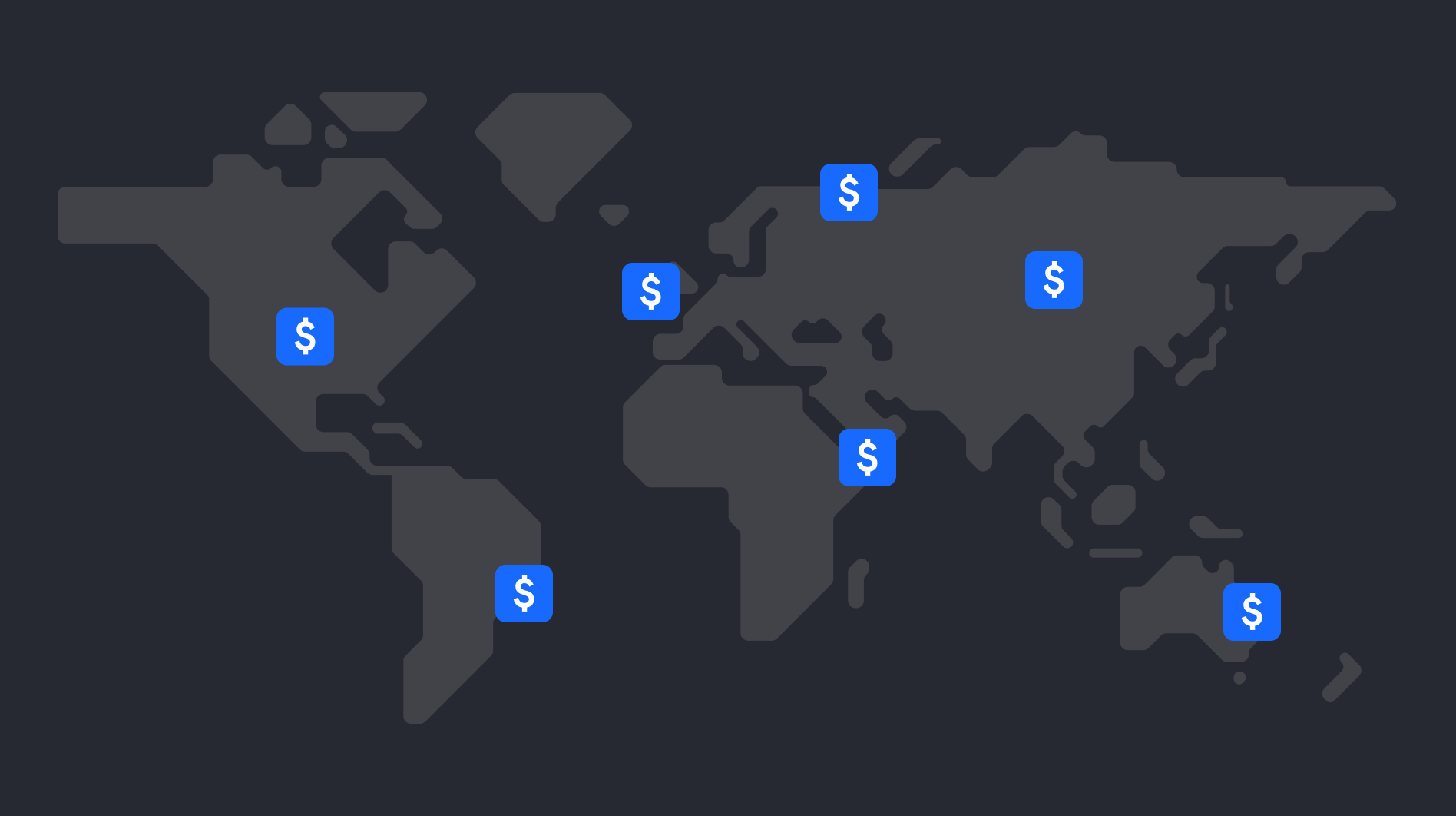
The countries with the highest BNPL adoption rates are Australia and Sweden, followed closely by China, Singapore, the US, the UK, and Germany. Below is a snapshot of key regulatory milestones around the world.
United Kingdom: BNPL under FCA oversight by 2026
The UK is in the middle of implementing significant BNPL reforms. By mid-2026, most BNPL providers will be subject to the FCA’s supervision, although merchant-offered installment options will remain exempt. HM Treasury’s legislation aims to boost consumer protection, transparency, and accountability, and to promote responsible lending.
The legislation focuses on:
- Clear consumer disclosures on repayment terms and rights
- FCA oversight and enforceability “allowing the FCA to apply rules on affordability and creditworthiness checks”
- Expanded borrower protections, including access to the Financial Ombudsman Service
- Mandatory BNPL data sharing with credit reference agencies like Experian and TransUnion to ensure BNPL impacts are represented in consumer credit files
The UK’s approach aims to balance innovation with consumer protection – and significantly increase transparency.
United States: Fragmented and state-driven
The US doesn’t have a unified BNPL regulatory regime, and instead, regulations vary by state.
The Consumer Financial Protection Bureau’s (CFPB) 2024 interpretive rule
This rule originally stated that specific BNPL products must comply with parts of Regulation Z under the Truth in Lending Act, but announced in May 2025 that it was not an enforcement priority as the regulator seeks to keep “enforcement and supervision resources focused on pressing threats to consumers.” CFPB has stated it won’t be issuing a revised BNPL rule as it doesn’t believe that BNPL lending is appropriate for credit card regulations.
As a result, enforcement action is now predominately at the state level:
- New York has passed BNPL oversight laws outlining product requirements
- California is one of the leading states, regulating BNPL under the California Financing Law (CFL)
- The Maryland Office of Financial Regulation ruled that BNPL transactions count as loans under state law, meaning providers must be licensed to offer them
The US is one of the most complex BNPL regulatory environments due to its fragmentation.
Australia: The global trailblazer
Australia has been one of the earliest and most proactive regulators of BNPL.
The Treasury Laws Amendment (Responsible Buy Now Pay Later and Other Measures) Act 2024 (Cth) amended the National Consumer Credit Protection Act 2009 (Cth) (the “Credit Act”) to extend the National Credit Code (Schedule 1 to the Credit Act) to regulate BNPL products as credit products. The new regime took full effect in June 2025, which:
- Requires BNPL providers to hold a credit license and become a member of the Australian Financial Complaints Authority (AFCA)
- Mandates responsible lending obligations
- Requires BNPL providers to conduct credit assessments
European Union: CCD II resets the BNPL landscape
EU member states must implement the Consumer Credit Directive II (CCD II) by the end of 2025, coming into force in 2026. CCD II aims to boost consumer protection against irresponsible lending, including BNPL.
Key changes include:
- Stricter lending controls
- Interest and fee regulation
- Expanded consumer rights
- Obligations for retailers who offer BNPL
- The exemption for short-term, interest-free BNPL products (under three months) is eliminated. Now, only direct-to-consumer BNPL offered by retailers or service providers retains a limited exemption, not third-party BNPL platforms.
Sweden: Licensing requirements under the Consumer Credit Act
As one of the highest BNPL adoption markets, Sweden requires:
- All BNPL providers to be licensed by the Swedish Financial Supervisory Authority
- Compliance with local CCD II standards
Given Sweden’s strong consumer protection culture, these regulations are closely enforced.
Singapore: Code of Conduct with BNPL accreditation
In 2022, under the guidance of the Monetary Authority of Singapore (MAS), the Singapore FinTech Association (SFA), together with industry players, have co-created a BNPL Code of Conduct, mandating:
- Accreditation for BNPL providers
- Strong consumer protection, including creditworthiness safeguards
- Clear disclosure and fair and transparent fees
Singapore’s approach mirrors its broader fintech philosophy: innovation allowed, but tightly supervised.
The future of BNPL will be defined by trust, transparency, and regulation
What began as a smooth, ecommerce convenience is now recognized as a form of short-term credit that must be regulated accordingly. Around the world, legislators are working to establish guardrails that protect consumers, reduce fraud, and ensure sustainable lending practices.
For businesses, the opportunity is clear: by preparing now for the next wave of regulatory changes, partnering with compliant providers, and designing optimized checkout experiences, you can capture the continued growth of BNPL while safeguarding both customers and revenue.
With Checkout.com, you can accept 42 different payment methods (and counting), including leading BNPL options like Klarna, Alma, and Tamara.
BNPL’s potential remains immense. And its next chapter will be shaped by both innovation and responsibility.

.png)



%20thumbnail.png)

.png)

